

Send Message
Privacy statement: Your privacy is very important to Us. Our company promises not to disclose your personal information to any external company with out your explicit permission.
 Qingdao Yizhou bearings technology co., ltd
Select Language
English


Miniature bearings are precision-engineered components designed for applications where space is limited but performance is critical. These small-diameter ball bearings, typically ranging from 1mm to 100mm in bore size, serve as the backbone of modern micro-mechanisms. For procurement managers, understanding the distinction between standard and miniature bearings is essential because they operate under different tolerances, load requirements, and environmental conditions.
Unlike standard bearings, miniature bearings require tighter manufacturing tolerances to maintain rotational accuracy in compact spaces. They are commonly used in medical devices, robotics, aerospace controls, and optical instruments where even microscopic misalignment can cause system failure.
When sourcing miniature bearings, buyers must consider material composition (typically stainless steel or ceramic), lubrication type, seal configuration, and cage design. Qingdao Yizhou Bearing Technology Co., Ltd. (YZHB) specializes in high-precision miniature bearings that meet international standards, ensuring consistent performance across diverse industrial applications.
At YZHB, miniature bearing production follows rigorous quality protocols rooted in 35 years of industry expertise. Our facility implements Toyota's lean production model since 2014, ensuring minimal waste and maximum efficiency in every batch.
Our manufacturing process adheres to ISO 14001 environmental management standards, guaranteeing that our miniature bearings are produced sustainably without compromising quality. This certification reflects our commitment to responsible manufacturing practices that meet global regulatory requirements.
Every batch of miniature bearings undergoes comprehensive testing including dimensional inspection, surface roughness analysis, rotation torque measurement, and fatigue life evaluation. Our 300 high-end technicians utilize state-of-the-art measuring equipment to ensure each bearing meets exact specifications.
We source premium stainless steel and specialized alloys for our miniature bearings, ensuring corrosion resistance and extended service life. Material certificates accompany every shipment, providing full traceability from raw material to finished product.
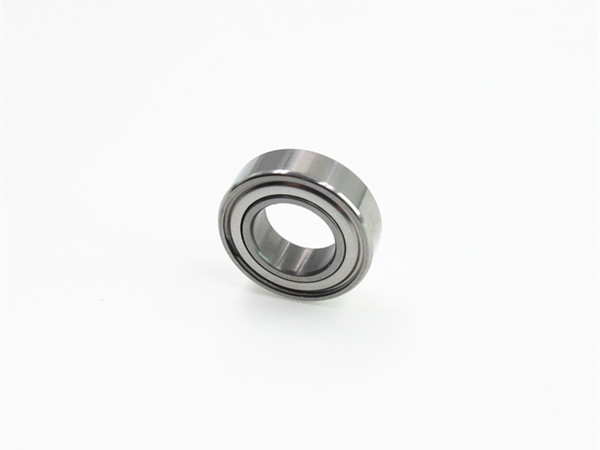
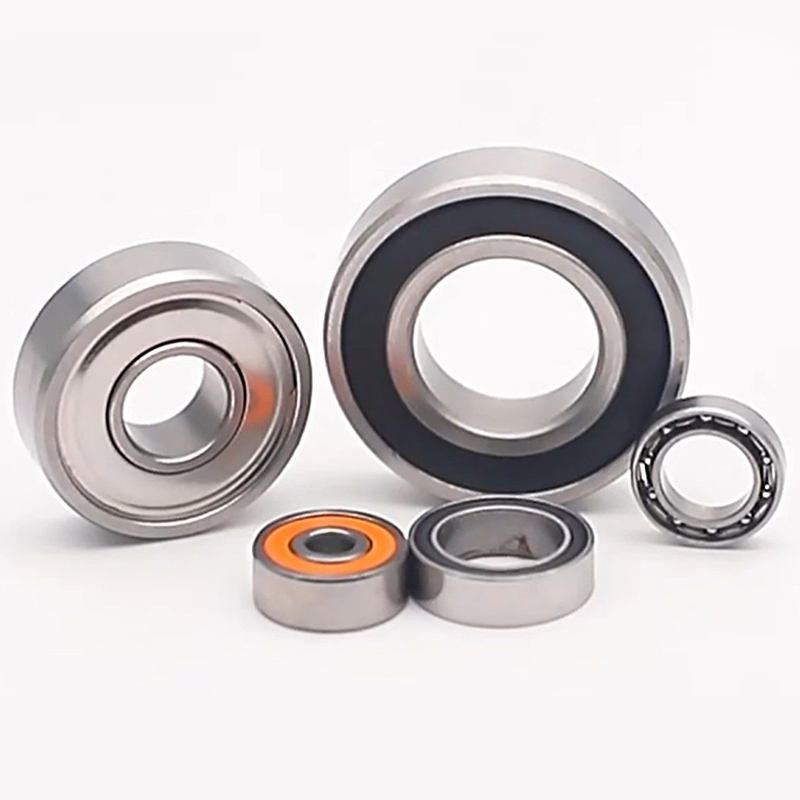
Selecting the correct miniature bearing requires careful evaluation of your application's specific demands. The wrong choice can lead to premature failure, increased maintenance costs, and production downtime. Here's a systematic approach to making the right decision.
Determine whether your application requires primarily radial load capacity or axial (thrust) load support. Angular contact miniature bearings handle combined loads effectively, while deep groove designs excel in pure radial applications.
High-speed applications demand bearings with optimized cage designs and low-friction lubricants. Operating temperature ranges influence material selection—stainless steel offers better performance in corrosive or high-temperature environments compared to standard chrome steel.
Consider your operating environment: dusty, wet, or clean conditions dictate seal type. Shielded bearings suit clean environments, while contact seals provide superior protection against contaminants in harsher conditions.
Applications like medical equipment and optical instruments require ABEC-5 or higher precision grades. Standard industrial applications may suffice with ABEC-1 or ABEC-3 ratings, offering cost savings without sacrificing reliability.
Use this comprehensive checklist to evaluate potential suppliers and ensure you select the right miniature bearing partner for your business needs. Each criterion addresses common procurement risks and helps minimize supply chain disruptions.
Procurement professionals frequently encounter challenges when sourcing miniature bearings. Understanding these common issues and their solutions can save time, reduce costs, and prevent costly production interruptions.
Minor variations in bore diameter or outer circle dimensions can cause assembly failures in precision equipment. This often stems from inadequate quality control at lower-cost suppliers.
Solution: Partner with manufacturers like YZHB who implement strict dimensional inspection protocols and provide detailed measurement certificates with every shipment.
Early wear, noise, or seizure indicates substandard materials or improper heat treatment. This leads to warranty claims, field failures, and damaged customer relationships.
Solution: Specify certified materials and request fatigue life test data. YZHB's 35-year expertise ensures proper heat treatment processes that extend bearing service life significantly.
Single-source suppliers or those without diversified production capabilities face bottlenecks during peak demand periods, causing project delays.
Solution: Work with established manufacturers operating multiple production facilities. YZHB's network of 7 bearing production enterprises ensures continuity even during unexpected demand spikes.
Missing installation guides, maintenance schedules, or replacement part information complicates inventory management and increases downtime during bearing replacements.
Solution: Choose suppliers who provide comprehensive technical documentation, CAD drawings, and 3D models. YZHB's professional service team supports customers with complete technical packages.
Miniature bearings enable precision operation across diverse sectors. From life-saving medical devices to cutting-edge robotics, these small components play outsized roles in enabling advanced technologies. Understanding application-specific requirements helps optimize bearing selection for performance and longevity.
Surgical tools, diagnostic imaging systems, and implantable devices require ultra-precise, biocompatible miniature bearings that operate silently and reliably.
Robotic joints, servo motors, and automated guided vehicles depend on miniature bearings that deliver precise positioning with minimal backlash and wear.
Power windows, seat adjusters, sensors, and HVAC systems utilize miniature bearings that withstand vibration, temperature extremes, and continuous operation cycles.
Flight control surfaces, actuation systems, and navigation instruments require miniature bearings with exceptional reliability and zero-defect performance standards.
Optical equipment, CNC machines, and measurement devices rely on miniature bearings that maintain alignment accuracy over thousands of operational hours.
Hard disk drives, camera lenses, cooling fans, and wearable devices incorporate miniature bearings that enable smooth, quiet operation in compact form factors.
Partnering with the right bearing manufacturer impacts your total cost of ownership, product reliability, and supply chain resilience. Consider these critical factors when evaluating miniature bearing suppliers for your organization.
Large-scale manufacturers like YZHB operate 40,000 square meter facilities with 2,000 production staff and 300 high-end technicians. This scale ensures consistent supply, competitive pricing, and the ability to handle large-volume orders without compromising quality.
Suppliers offering comprehensive bearing portfolios (automobile, agricultural, miniature, robot bearings) simplify your procurement process. Single-source capability reduces vendor management overhead and ensures compatibility across your product lines.
YZHB has implemented Toyota's lean production model since 2014, resulting in reduced waste, improved efficiency, and consistent quality. This operational excellence translates to shorter lead times and more predictable delivery schedules for buyers.
With established sales networks in Russia, Central Asia, Southeast Asia, Africa, and the Middle East, experienced suppliers understand international logistics, customs requirements, and regional market demands. This global presence ensures reliable worldwide delivery.
The ideal supplier delivers "higher quality at the same price" through efficient manufacturing and economies of scale. Look for partners who invest in technology and talent to continuously improve their value proposition rather than competing solely on price reductions.
YZHB employs 100 sales reception personnel dedicated to providing thoughtful, professional service. Dedicated support teams ensure quick response times, technical consultation, and proactive problem resolution throughout the buyer-supplier relationship.
Get answers to common questions about miniature bearing specifications, selection criteria, and procurement considerations from Qingdao Yizhou Bearing Technology Co., Ltd.
Miniature bearings typically have bore diameters ranging from 1mm to 100mm. This category includes both shielded and sealed variants, available in various widths and cage designs to suit specific application requirements.
Standard miniature bearings use chrome steel (GCr15/SUJ2), while corrosion-resistant applications utilize stainless steel (440C, 304, 316). Ceramic hybrid options combining steel races with silicon nitride balls offer enhanced performance for high-speed or electrically isolated applications.
Miniature bearings are manufactured to ABEC (Annular Bearing Engineers' Committee) grades 1, 3, 5, 7, and 9. Higher grades indicate tighter tolerances and smoother operation. Most industrial applications require ABEC-1 to ABEC-3, while medical and optical equipment often specify ABEC-5 or higher.
YZHB implements Toyota's lean production model with rigorous quality checkpoints at every manufacturing stage. Each batch undergoes dimensional inspection, surface finish verification, rotation torque testing, and visual examination. Our ISO 14001 certification demonstrates our commitment to systematic quality management.
Standard miniature bearing orders typically ship within 7-15 business days, depending on quantity and specification complexity. YZHB maintains safety stock for popular sizes to ensure rapid fulfillment. Custom specifications may require 20-30 days for production and quality validation.
Yes, YZHB's engineering team supports custom miniature bearing development including special materials, non-standard dimensions, unique seal configurations, and tailored lubrication. Our 35 years of experience enables rapid prototyping and validation of custom designs for OEM applications.
YZHB actively serves markets across Russia, Central Asia, Southeast Asia, Africa, and the Middle East. Our experienced export team manages international logistics, documentation, and compliance requirements to ensure seamless delivery to global customers.
About Us
Related Products List
Contact Us

Send Inquiry
Privacy statement: Your privacy is very important to Us. Our company promises not to disclose your personal information to any external company with out your explicit permission.
Fill in more information so that we can get in touch with you faster
Privacy statement: Your privacy is very important to Us. Our company promises not to disclose your personal information to any external company with out your explicit permission.